

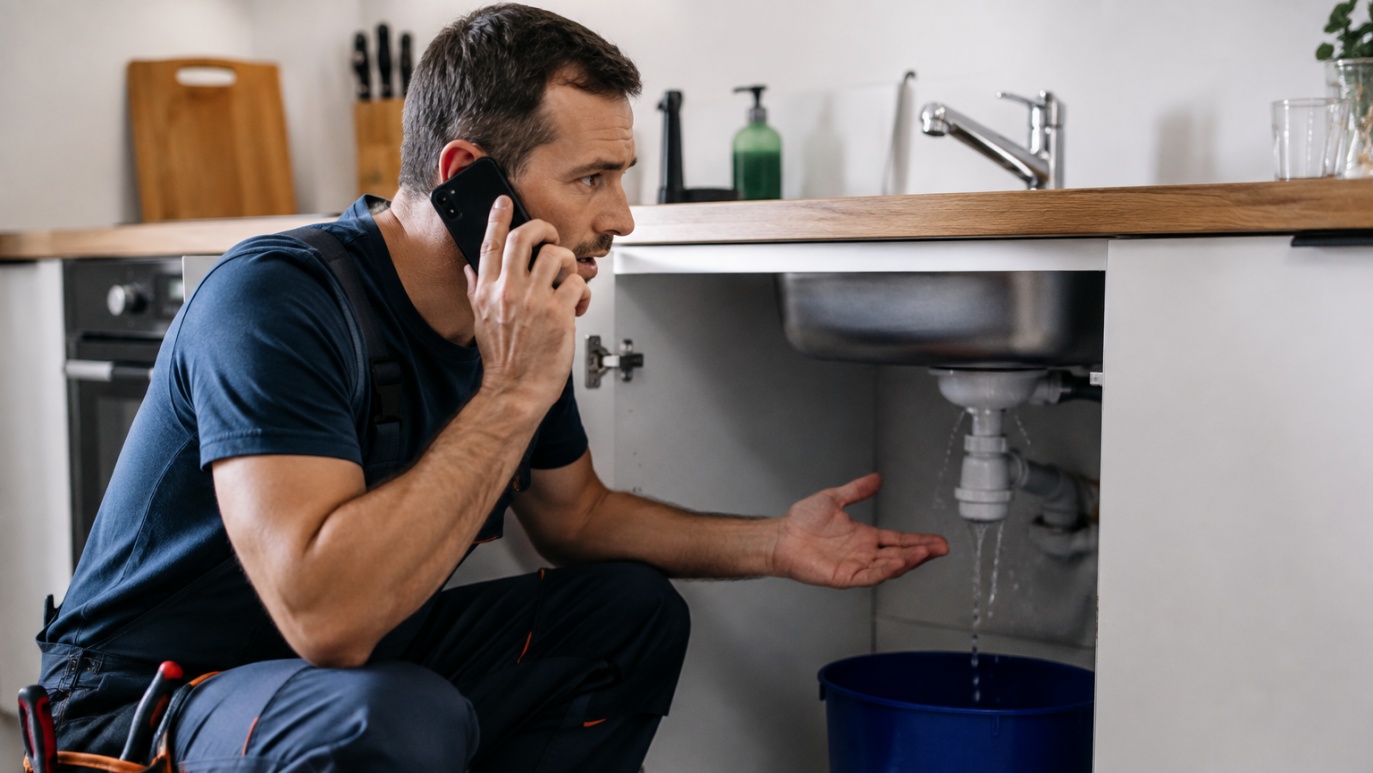
Most plumbing companies run Google Ads the same way every other local service does: one campaign, one generic landing page, one “contact us” button buried at the bottom of the page. That setup ignores what makes plumbing searches different from almost any other home service. A large share of them are genuine emergencies, and emergencies convert on the phone in the next few minutes, not through a contact form filled out three days later after someone has had time to compare quotes. A plumber marketing agency that understands this builds the entire campaign around getting the phone to ring, not just the click to happen.
Below is the playbook we use to restructure plumbing ad accounts around calls: which ad formats actually fit emergency intent, how to write copy that gets picked over a competitor’s in the two seconds someone spends scanning the results, and how to set up tracking so you know which dollars are producing booked jobs instead of just clicks that never turned into anything.
What a plumber marketing agency should build differently for emergency calls
A generic PPC setup optimizes for clicks. An emergency-call setup optimizes for the moment someone’s basement is flooding and they need a plumber in the next hour, not a business they’ll research and call back next week once they’ve had time to shop around. That difference changes almost every decision in the account: which ad formats you run, how your budget is scheduled across the day, how aggressively you bid during off-hours, and what the ad copy actually says to someone in a hurry.
This is the same principle behind our broader plumber marketing approach. Paid search is one channel inside that strategy, not a standalone purchase treated separately from everything else you do online, which is why campaign structure gets built around how your specific customers actually search in your specific market, not a generic template pulled from a different trade or a different city.
The 3 google ads formats plumbing companies actually need
Plumbing accounts that convert well almost always run some combination of these three formats, weighted differently depending on your market, your budget, and how much of your business is genuinely emergency-driven versus scheduled work.
Local Services Ads for the Google Guaranteed badge
Local Services Ads sit above regular search results, run on a pay-per-lead model instead of pay-per-click, and carry the Google Guaranteed badge once your business passes screening on registration and identity. According to Google’s own Local Services Ads page, you only pay when a potential customer actually gets in touch, whether that’s a call, a message, or a booking, which is a fundamentally different risk profile than paying for a click that might bounce off your site in three seconds without converting at all.
Search ads with call extensions, not just a landing page link
Regular search ads still matter, especially for non-emergency searches like scheduled maintenance visits or fixture installs where the customer has time to research. The mistake most plumbing accounts make is sending every single click to a landing page and hoping for a form fill days later. Adding call extensions puts a tap-to-call button directly on the ad itself, which matters most on mobile, where the large majority of emergency plumbing searches happen in the moment something goes wrong.
Negative keywords that protect your budget from the wrong searches
“Plumber salary,” “plumbing license requirements,” and “DIY fix leaking pipe” all contain your core keywords but carry zero commercial intent whatsoever. A negative keyword list built specifically for your services, updated monthly as new irrelevant searches show up in your search terms report, is the difference between a campaign that spends efficiently and one that quietly leaks budget on searches that were never going to become a customer no matter how well the ad was written.
Want a free audit of what your current campaign is actually spending on? Request a free strategy call and we’ll show you exactly where the budget is going before you commit to anything.
Plumber ppc agency setup: campaign structure that isolates emergency intent
A plumber ppc agency worth hiring separates emergency intent from routine intent at the campaign level, not just the keyword level, because the two need completely different budgets, schedules, and bidding strategies to perform well.
Ad scheduling matters more here than in almost any other industry we work with. If a real share of your business comes from after-hours emergencies, your ads need to be live and appropriately bid at 2am, not just during business hours when it happens to be convenient to answer the phone. Geo-radius targeting should match your actual service area exactly, since paying for clicks from 40 miles outside your real coverage zone is one of the most common and most avoidable ways plumbing budgets get wasted month after month.
This is where our paid media management services come in, building that separation into the account structure from day one rather than bolting it on later, and layering in call tracking so every lead is attributed back to the specific campaign, ad group, and keyword that actually produced it, not just a general channel-level guess.
What a realistic emergency-weighted budget split looks like
There’s no universal number here, since it depends heavily on how much of your revenue actually comes from same-day emergency work versus scheduled installs and maintenance contracts. A company that’s mostly emergency-driven often ends up weighting 60 to 70 percent of paid spend toward Local Services Ads and call-extension search ads covering true urgency terms, with the remainder on broader search and remarketing for the scheduled side of the business.
A company doing mostly planned installation and renovation work flips that ratio, putting more budget into search ads targeting research-phase keywords and less into the emergency-specific formats, since fewer of their customers are searching in a genuine panic at 11pm on a Sunday.
Writing plumber advertising copy that gets the phone to ring
Plumber advertising copy that works leads with the outcome, not the company name. “Plumber on-site in 60 minutes” outperforms “Family-owned plumbing since 1998” for emergency searches every time, even when the second claim is true and the first is a promise you have to actually be able to keep once the call comes in.
Ad extensions do real work here too. A call extension, a location extension showing you’re nearby, and a sitelink to an emergency-specific page all add credibility and give the searcher more ways to act, without costing anything extra to include. The landing page the ad points to should match the ad’s promise exactly. An ad about emergency drain clearing that lands on a general homepage loses conversions it already earned with the click, because the person now has to hunt for the thing the ad promised them.
Digital marketing for plumbers: where seo and ppc fit together
Digital marketing for plumbers works best when paid and organic aren’t run as two separate, unrelated budgets reported on in two separate meetings. Google Ads buys visibility immediately while your organic rankings and Google Business Profile strength build over months of consistent work. Once organic starts pulling its own weight for routine, non-urgent searches, ad budget can shift more heavily toward the emergency and after-hours searches where paid placement still wins regardless of how strong your organic presence eventually gets.
Plumbing companies that treat these as two separate line items with two separate reports usually end up overpaying for clicks that organic could have earned for free within a few months, or underinvesting in ads during the exact window before organic rankings have had time to mature and start contributing meaningfully.
The companies that get this right tend to review both channels in the same conversation every month, not two disconnected reports from two disconnected teams. When an organic service page starts ranking well for a routine keyword, that’s the signal to pull paid spend back on that exact term and redirect it toward whichever emergency or after-hours search is still underperforming, rather than leaving both budgets running at their original levels indefinitely.
How to choose a plumber marketing agency for ppc
Ask how they separate emergency and routine campaigns in the actual account, not just in a proposal deck built to win the pitch. Ask to see a real negative keyword list from a similar client, since a vague or generic answer here usually means one doesn’t exist yet. Ask how leads are tracked back to specific ads, and whether that tracking includes phone calls, not just form fills, since forms are a small fraction of how plumbing leads actually come in for most companies.
We build every paid media account from scratch for the trade and market it serves, with no shared negative keyword templates and no ad copy recycled from a different client in the same category just because it performed well somewhere else.
Frequently asked questions
How to market a plumbing company
Combine a complete Google Business Profile, dedicated service pages for SEO, and Google Ads structured around emergency call intent, with call tracking so you can see which channel is actually producing booked jobs rather than just clicks or impressions. The businesses that grow fastest treat all three as one connected system instead of separate purchases made at different times.
Which is the best digital marketing agency for plumbers
The best fit is usually an agency that can show plumbing-specific results, not just general home services experience, and that builds custom campaign structures rather than applying the same template across every trade client they have. Ask for examples of actual accounts, not just a general case study.
Who is the best marketing agency for plumbers
There’s no single best agency for every plumbing company. The right choice depends on your market’s competitiveness, your budget, and whether you need SEO, PPC, or both built as one connected strategy rather than separate purchases with separate account managers who never talk to each other.
How marketing agencies measure roi for home services clients
A properly set up account ties every lead, call, and form fill back to the specific campaign and keyword that produced it, so return on ad spend is measured against booked jobs and revenue, not just clicks or impressions that never convert into an actual customer.
A plumber marketing agency that treats every click the same way you’d treat every customer the same way misses what makes this industry different: a large share of the value is in the calls that come in at the worst possible time for the customer and the best possible time for you to earn their business for years to come. Noble House Media builds Google Ads accounts around that reality instead of a generic template pulled from a different trade. Schedule your free strategy call or see the full plumber marketing approach this campaign structure fits inside.
Related posts
HVAC Marketing Agency: Seasonal PPC Strategy for HVAC Companies
August 31, 2026
Popular Articles


Landscaping Marketing: Get More Leads & Referrals
October 02, 2026






Why Roofing Companies Lose Storm-Damage Leads to Competitors With Better SEO
September 01, 2026