Pest control marketing only works if the website at the end of the click can turn a nervous homeowner into a booked service. You can pay for ads, build a strong Google Business Profile and earn great reviews, but if the site makes a visitor hunt for a price or a phone number, they will go back to the search results and call the next company.
The good news is that a handful of changes do most of the work. An instant quote tool leads the list, and four other features make it work harder.
Why pest control marketing starts with your website
Pest problems create urgency. Someone who finds droppings in the pantry or a wasp nest by the front door wants a clear answer quickly, and they are usually searching on a phone, sometimes late in the evening.
That means your website carries more weight than it does for most businesses. Every search ad, map listing and referral eventually lands on it. If the page is slow, confusing or silent about price, the money you spent earlier is wasted at the last step.
Strong pest control marketing treats the website as the place where interest becomes action. Every feature on this list exists to remove one reason a visitor might leave.
Must-have 1: An instant quote tool that answers the price question
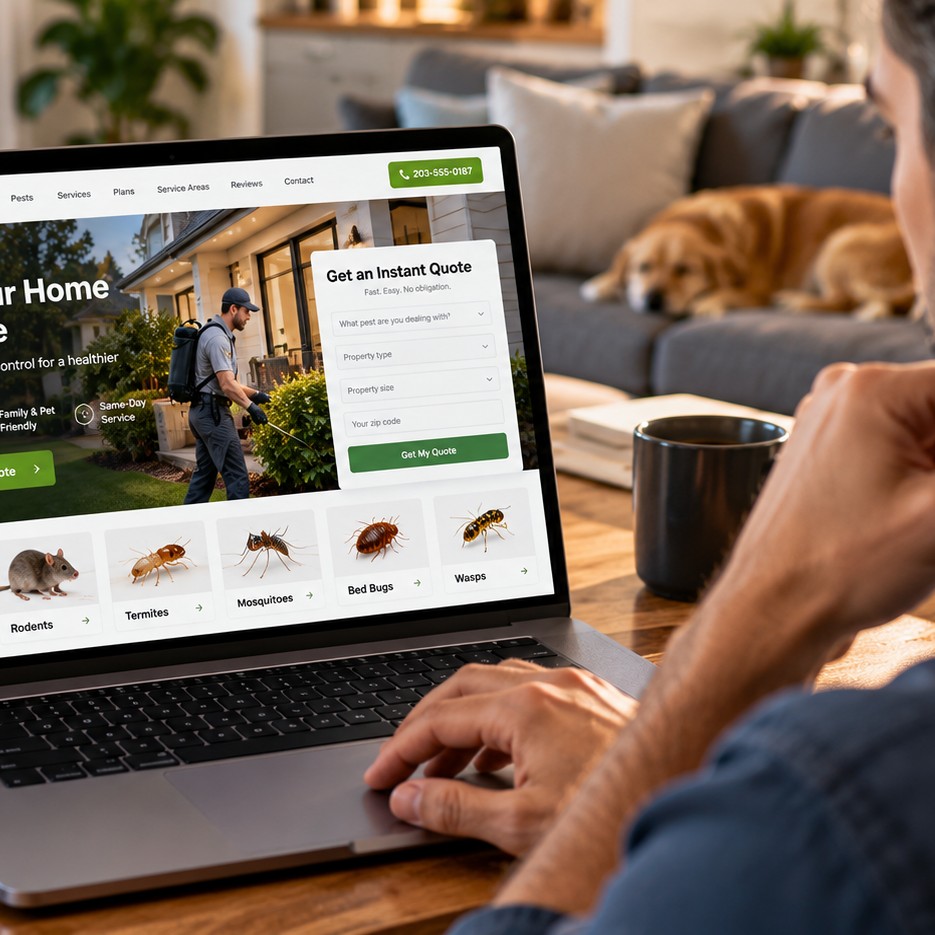
The first question on most visitors’ minds is how much this will cost. Companies that make people call to find out lose everyone who is not ready for a conversation yet, and in pest control that is a lot of people.
What a good quote tool asks
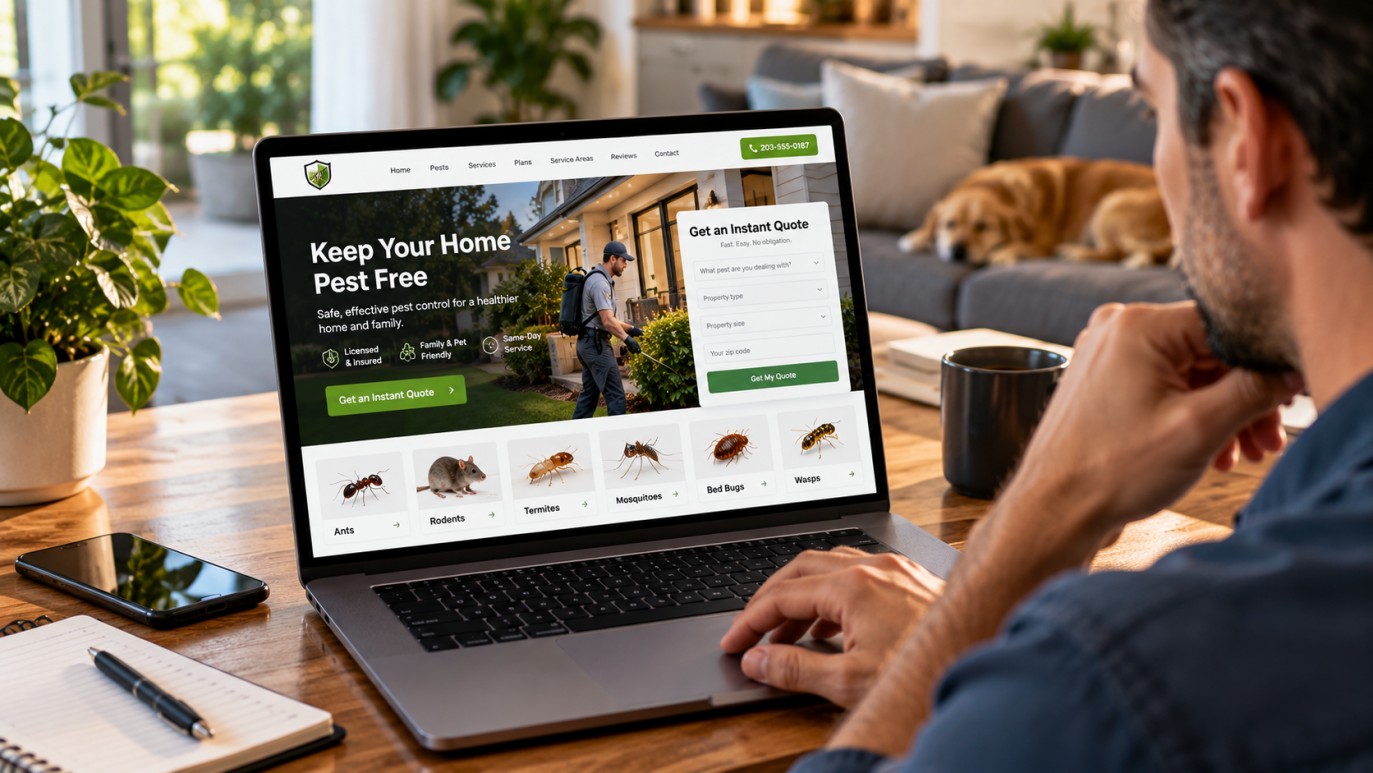
Keep it short. Ask what kind of pest, the type and rough size of the property, and where it is located. Then collect a name, a phone number and an email address so your team can follow up. Every extra question lowers the number of people who finish, so only ask what you need to give a useful estimate.
What the visitor sees afterward
Show a range or a starting price when you can, and explain what the quote includes. When a custom price is needed, say so plainly and promise a response time, such as the same business day. A clear next step keeps the visitor engaged instead of wondering whether anyone received the request.
Must-have 2: Click-to-call and a layout built for phones
Many pest searches happen on a phone, so the phone number should be a tap-to-call button that stays visible as the visitor scrolls. Place it in the header, on every service page and next to every form.
Speed matters as much as design. A visitor with a wasp problem will not wait for a heavy image slider to load. Compress photos, remove features nobody uses and keep the first screen simple: what you do, where you do it and how to reach you.
Test your own site on a phone. Check how fast it loads, whether buttons are easy to press with a thumb and whether text is readable without zooming. Our website design and development team builds sites with this kind of mobile behavior in mind, because that is where most pest customers first meet your company.
Must-have 3: A separate page for each pest and service
A single page titled Services that lists ants, rodents, termites, mosquitoes and bed bugs gives Google and visitors a thin answer to each. People searching for one problem want a page about that problem.
Google’s guidance on improving local ranking names relevance, distance and prominence as the factors behind local results. Dedicated pages strengthen relevance by showing exactly what you handle and where. For each pest, explain the signs, the treatment you use, how many visits it usually takes and what the homeowner should do to help.
These pages also support your search visibility. Our search engine optimization and AIO service builds this kind of structure so each page can rank for the problem it covers.
Not sure whether your website is helping or hurting your pest control leads?
Must-have 4: Trust signals near every call to action
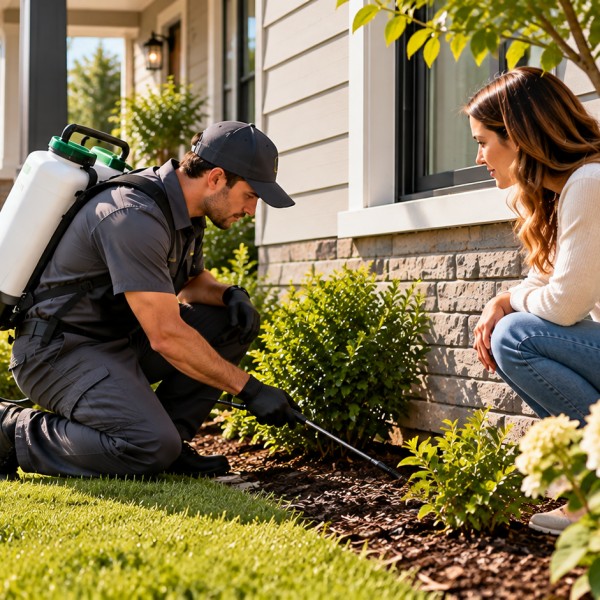
Letting a pest technician into your home takes trust, especially for families with children or pets. Your site should answer the safety question before the visitor has to ask it.
Show your license information, proof of insurance, technician training and any industry memberships you hold. Add real customer reviews with names and towns, and put a few of them near your quote form and phone number. If you use products with specific safety considerations, explain them in plain language.
Keep the proof specific. A review that says the technician arrived on time, explained the treatment and answered questions about pet safety does more work than a generic five-star rating.
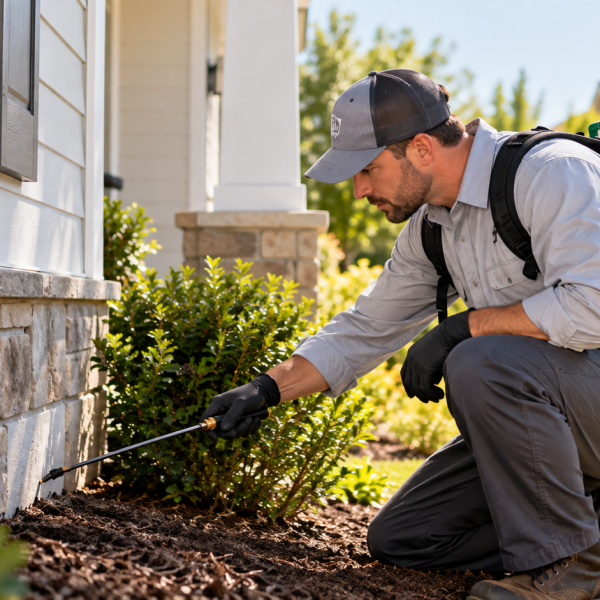
Photos of your actual team and trucks help too. A stock photo of a smiling technician tells a visitor nothing, while a picture of the real person who will arrive at their door builds comfort quickly.
Must-have 5: A clear path to recurring plans
A one-time treatment is rarely the end of a pest problem, and prevention is where most of the long-term value sits. Your website should make the recurring option easy to find and easy to understand.
Describe your quarterly or seasonal plans on their own page. Explain how often visits happen, what each visit covers and what happens if pests return between visits. Offer the plan next to the quote tool so a visitor can request ongoing service in the same step as a single treatment.
This is also where you protect your margins. A customer who signs up for a plan costs far less to keep than a new customer costs to win.
Pest control marketing pays off when the site and the follow-up match
A great website still needs a team ready to respond. Decide who receives quote requests, how fast they reply and what they say. A fast, friendly reply to a quote request can be the difference between a booked job and a lost one, since the homeowner is likely contacting more than one company.
Include your office hours and an after-hours option if you offer one. Pest problems do not keep a nine-to-five schedule, and a visitor who sees that someone will respond tonight is more likely to submit the form than one who sees nothing.
Review your numbers each month. Look at how many visitors reach the quote tool, how many finish it and how many become customers. Small changes, like shortening a form or moving a phone number, can lift those numbers without any extra ad spend.
If you want help connecting the website to your ads, reviews and local listings, our pest control marketing page explains how Noble House Media builds strategies from scratch for pest companies.
Frequently asked questions
What is pest control marketing?
Pest control marketing is the set of activities that bring customers to a pest company and turn them into booked service. It usually includes the website, local search, Google Ads, reviews and follow-up, working together so that each lead has a clear path to becoming a customer.
Do I really need an instant quote tool on my pest control website?
It is not required, but it removes a common reason visitors leave: not knowing the price. A short tool that collects the pest type and property details, then gives a range or a prompt reply, captures people who are not ready to pick up the phone yet.
How many pages should a pest control website have?
There is no fixed number, but each major pest or service you offer should have its own page, along with pages for your plans, your service areas, reviews and contact details. More important than the count is that each page answers a specific question well.
How do I know if my pest control website is converting?
Track how many visitors call, submit the quote form or request a plan, then compare that number to total visits. If many people visit but few act, look at page speed, the visibility of your phone number and the length of your forms before spending more on ads.
A pest control website that answers questions fast, shows real proof and makes the next step obvious will outperform a prettier one that does not. Noble House Media builds pest control marketing from scratch around your services and your market, never from a template, because the goal is sales, not promises. See the kind of work our team does in our portfolio.